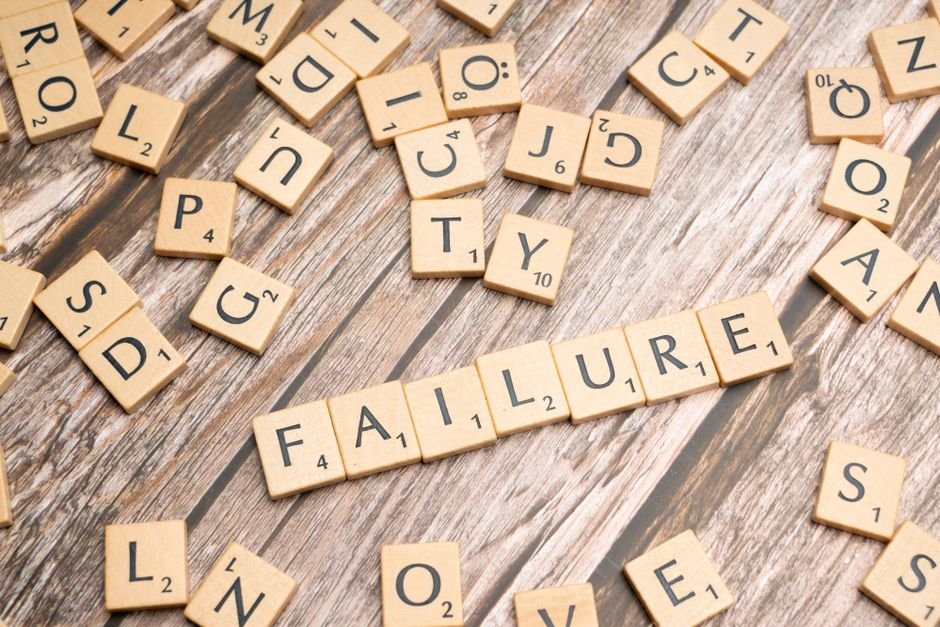
How to build resilience after failure means developing the specific skills, habits, and mindset shifts that allow you to recover from setbacks, learn from them, and move forward with more clarity than you had before. It is not about pretending failure didn’t hurt. It’s about building a structured path through the pain.
What Does Building Resilience After Failure Actually Mean?
Resilience is not a personality trait you either have or lack. Psychological resilience is defined by researchers as the capacity to recover from difficulties and adapt to challenging circumstances. Think of it less like armour and more like a muscle. You build it through deliberate practice, not through sheer willpower or positive thinking.
For entrepreneurs, students, and professionals, this matters enormously. The setback you just experienced is not the end of your story. The question is what you do with it next.
Why Failure Feels So Devastating (and Why That’s Normal)
When something goes badly wrong, whether it’s a failed business, a lost job, or a rejected application, your brain registers it as a genuine threat. The amygdala fires, cortisol spikes, and your nervous system responds almost identically to a physical danger. That’s not weakness. That’s biology.
Failure also threatens identity. If you tied your sense of self to the outcome, losing the outcome feels like losing yourself. Research in self-determination theory consistently shows that threats to competence and autonomy produce the same emotional weight as social rejection. So if you’re currently feeling shattered, know this: the intensity of what you’re feeling is proportional to how much you cared. That caring is not a flaw.
Throughout human history, cultures have used symbols of strength and resilience throughout history precisely because overcoming hardship has always been part of what it means to live fully. You are not alone in this.
Step 1: Process the Failure Without Judgment
Before you do anything strategic, you need to feel what happened. Skipping this step is the most common mistake people make, and it always costs them later.
Grab a notebook and write for ten uninterrupted minutes. Don’t edit. Don’t analyse yet. Just name what you’re feeling: disappointment, embarrassment, anger, grief. Naming an emotion activates the prefrontal cortex and literally reduces the intensity of what you’re feeling, a process psychologists call affect labelling.
The critical move here is separating the event from your identity. You made decisions that led to a bad outcome. That is very different from being a failure. One is a chapter; the other would be the whole book. You are not the whole book.
Step 2: Extract the Lessons With an After-Action Review
Once the emotional intensity has settled, even slightly, it’s time to get analytical. The military uses a tool called an After-Action Review (AAR), and it translates perfectly to personal and professional setbacks. Ask yourself three questions:
- What actually happened? Describe the sequence of events as a neutral observer would. Strip out blame language.
- Why did it happen? Look for root causes, not surface excuses. Was it timing, resources, skill gaps, assumptions you made too early?
- What would you do differently? Write at least three specific changes you’d make, not vague intentions but concrete actions.
This is the core of how to build resilience after failure in practice. You are not just surviving the setback; you are mining it for information that makes your next move sharper.
Step 3: Rebuild Your Self-Belief Through Small Wins

After a big failure, confidence doesn’t come back in one dramatic moment. It comes back in increments. Your job right now is to design those increments deliberately.
Set micro-goals: tasks you can complete within 24 to 48 hours that are genuinely challenging but well within your current capacity. Finish a draft. Send three emails. Complete a short course module. Each completion sends your brain a signal that you are still capable, still competent, still moving.
Identity-based habits matter here too. James Clear’s framing from Atomic Habits is useful: instead of saying “I’m trying to get back on track,” say “I’m the kind of person who shows up even after setbacks.” That subtle shift reinforces who you are, not just what you do. The momentum builds faster than you expect.
Step 4: Reframe Your Narrative Around the Failure
The story you tell yourself about what happened will shape everything that follows. This isn’t toxic positivity. It’s cognitive architecture.
Cognitive reframing, a technique well-established in CBT (Cognitive Behavioural Therapy), asks you to examine whether your current interpretation is the only valid one. Usually it isn’t. A failed startup isn’t proof you’re not cut out for entrepreneurship. It’s proof you ran an experiment, gathered data, and now have information no classroom could have given you.
Successful people reframe constantly. They don’t deny what went wrong; they contextualise it. “This happened to me” becomes “this happened for my development.” That shift is not naive. It’s a choice that changes behaviour, and behaviour changes outcomes.
Part of this reframing involves developing leadership skills that help you recover from setbacks, because how you lead yourself through difficulty is the foundation of how you’ll eventually lead others.
Step 5: Build Protective Habits That Prevent Burnout
Resilience is not just a mental game. Your body is your resilience infrastructure. Sleep deprivation alone impairs emotional regulation so severely that everything else on this list becomes harder to execute.
Prioritise the basics with an almost boring consistency: seven to eight hours of sleep, some form of daily movement, and regular nutrition. These are not optional wellness extras. They are the physical substrate of mental recovery.
Understanding why stress management is essential for long-term resilience reframes these habits from “self-care” into “professional infrastructure.” The entrepreneurs and leaders who sustain high performance over years are almost always the ones who treat physical health as a non-negotiable.
A simple morning routine, even ten minutes long, anchors your sense of control during periods when everything else feels chaotic. That anchor matters more than people realise.
Step 6: Leverage Community and Mentorship
Going through failure alone is both harder and slower than it needs to be. Social support is one of the most robust predictors of resilience in the research literature, yet it’s the resource most people are reluctant to use, especially high-achievers who feel they should have it together.
You don’t need to announce your failure publicly. But you do need one or two people who have experienced real setbacks themselves and can hold space for yours without flinching. Peer groups, mentors, or even a good therapist serve this function.
When asking for help, be specific. “I’m struggling and need perspective” lands better than a vague request. Good mentors respond to clarity. And the act of articulating your situation to someone else often produces insights you couldn’t reach alone.
Real-World Example: How Entrepreneurs Turned Failure Into Fuel
Sara Blakely, founder of Spanx and the first self-made female billionaire in the United States, didn’t get where she is by being immune to rejection. She spent years cold-calling and getting doors slammed in her face while selling fax machines door-to-door in Florida. She was rejected by manufacturers, ignored by retailers, and had no fashion industry background whatsoever.
What she had was a structured refusal to let any single rejection define the trajectory. She processed setbacks, extracted lessons, rebuilt her approach, and kept moving. Read more about Sara Blakely’s journey from repeated rejection to billion-dollar success to see exactly how those steps played out in practice.
Her story isn’t useful because she’s exceptional. It’s useful because the process she followed is reproducible. The steps she used are the same steps outlined here.
How Long Does It Take to Build Resilience After Failure?
Honest answer: it depends on the size of the failure, your existing support structures, and how consistently you apply the steps above. A minor professional setback might take weeks to fully process. A major one, a collapsed company, a lost career, a broken partnership, can take months.
What the research suggests is that most people significantly underestimate their own recovery capacity, a phenomenon called the impact bias. You will feel better sooner than you currently believe.
The goal isn’t to know how to build resilience after failure as a one-time event. It’s to make these habits permanent features of how you operate, so that future setbacks meet a stronger, more prepared version of you. That version is already in the process of being built.
FAQ
Can resilience be learned, or is it something you’re born with?
Resilience is absolutely learnable. While temperament plays some role, the bulk of resilience is built through deliberate habits, cognitive practices, and social support, all of which are trainable regardless of your starting point.
How do I stop feeling like a failure after a major setback?
Start by separating the event from your identity. You experienced a failure; you are not one. Journaling, talking to a mentor, and achieving small wins quickly are the most effective short-term tools for breaking that mental loop.
What is the fastest way to recover mentally after a business or career failure?
Process the emotion first, then get into action within 48 to 72 hours. The combination of naming your feelings, completing one meaningful task, and talking to one trusted person creates momentum faster than any amount of passive reflection alone.
How do I rebuild confidence when failure has shaken my self-belief?
Confidence rebuilds through evidence. Design a series of small, completable challenges and finish them. Each completion is a data point that contradicts the story that you can’t succeed. Stack enough data points and the narrative shifts.
Is it normal to feel worse before you feel better when working through failure?
Yes, completely normal. When you stop numbing or distracting yourself and actually process what happened, the feelings can temporarily intensify. This is part of the recovery, not a sign it isn’t working. Give the process time and stay consistent with the habits.