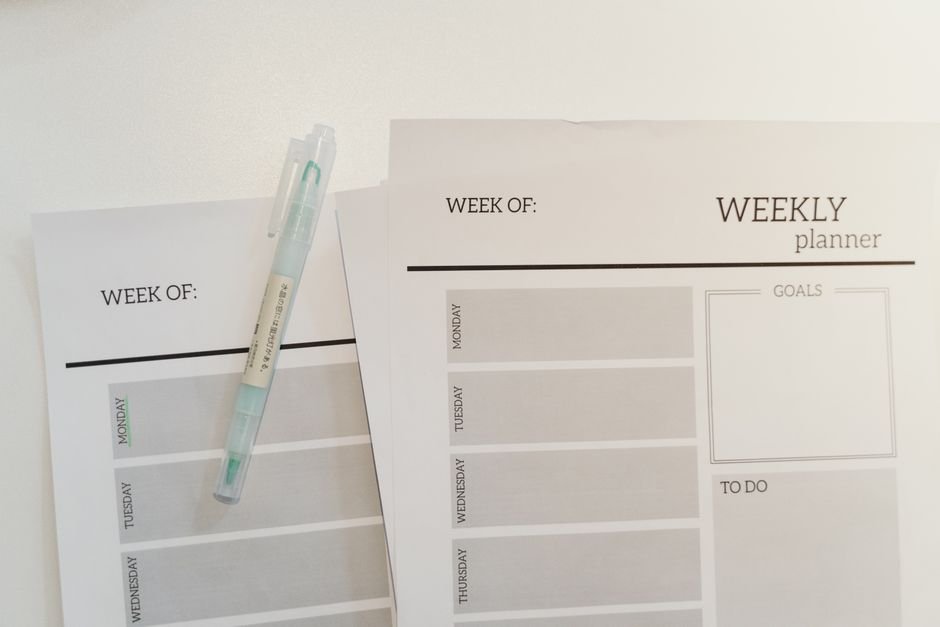
Knowing how to create a weekly schedule that actually works is one of the highest-leverage skills you can build, yet most people either skip it or keep rebuilding the same broken system every Monday. If you have tried color-coded planners, fancy apps, and Sunday planning sessions only to abandon everything by Wednesday, you are not the problem. The method is.
This guide will show you exactly why schedules collapse and how to build one that holds up under real life, not just ideal conditions.
Why Most Weekly Schedules Fail (and What to Do Instead)
The most common reason a weekly schedule falls apart is that it was built to impress, not to function. People cram every hour with tasks, leave zero room for the unexpected, and then feel like failures when life interrupts. That guilt kills motivation faster than any bad habit.
Three specific culprits show up repeatedly:
- Ignoring energy levels. Scheduling deep work at 9 PM when you are exhausted guarantees failure.
- No buffer time. A schedule with zero slack collapses the moment one meeting runs long.
- Treating the schedule as permanent. Life changes week to week. A rigid plan cannot absorb that.
The fix is not a better template. It is a better process, one that builds your schedule around you, not around a productivity influencer’s ideal day.
Step 1: Start With Your Goals, Not Your Tasks
Before you write a single time block, take ten minutes to set meaningful goals before building your schedule. This single step separates people who feel productive from people who actually make progress.
Ask yourself: what are the two or three outcomes that would make this week genuinely successful? Not a list of 40 tasks. Two or three real outcomes. Maybe it is finishing a client proposal, studying for an exam, and getting three workouts in. Those outcomes become your compass for every decision you make about your time.
When you know your weekly goals, tasks become obvious. Without them, you fill your schedule with busy work that feels urgent but moves nothing forward.
Step 2: Map Your Energy, Not Just Your Hours
You have 168 hours in a week, but you do not have 168 equally useful hours. Your brain has peaks and troughs, and scheduling hard cognitive work during a trough is like trying to sprint in wet concrete.
Spend a few days noticing when you feel sharp, focused, and creative versus sluggish and scattered. Most people have a peak window of two to four hours, usually in the morning, though night owls and shift workers are a real exception. That window is precious. Protect it.
Map your energy into three rough zones:
- Peak hours: Deep thinking, writing, studying, problem-solving, strategy.
- Mid-energy hours: Meetings, emails, admin tasks, calls.
- Low-energy hours: Errands, light reading, catching up on messages, household tasks.
Research on circadian rhythms consistently shows that cognitive performance is not flat across the day. Working with your biology rather than against it makes your schedule dramatically more effective with no extra effort.
Step 3: Build Your Week Around Anchor Tasks
Anchor tasks are the non-negotiable, recurring commitments that give your week its skeleton. Think of them as the load-bearing walls of your schedule. Everything else fits around them.
For a student, anchors might be lectures, a daily study block, and a gym session. For an entrepreneur, they might be a Monday planning hour, three deep-work mornings, and a Friday review. For a 9-to-5 professional, anchors could be a daily team standup, a personal development hour, and an evening workout.
Place your anchors first, ideally during your peak or mid-energy windows. Then fill the remaining space with flexible tasks. This is the core principle behind how to create a weekly schedule that actually works: structure comes from repeating habits, not from planning every minute.
Anchor tasks also do something powerful psychologically. When you show up for them consistently, you build evidence that you are someone who follows through. That self-trust compounds over time.
Step 4: Time-Block Smarter With Buffer and Flex Time
Time-blocking works. But most people time-block like optimists writing a best-case-scenario script. Every task takes exactly as long as hoped, every transition is instant, and nothing unexpected ever happens. That is fantasy scheduling.
Build buffer time deliberately. After any significant task or meeting, add ten to fifteen minutes of transition time. This is not wasted time. It is the space that stops one delay from cascading through your entire day.
Beyond buffers, block at least two to three hours per week as flex time, slots with nothing scheduled. When an urgent task appears (and it will), it goes in the flex block rather than blowing up the rest of your week. If nothing urgent comes up, use flex time to catch up, rest, or get ahead. Both outcomes are wins.
A schedule without flex time is like a road with no shoulders. One flat tyre and everything stops. Pair this approach with how to create a daily routine that actually sticks to reinforce your weekly structure at the day level.
Step 5: Design a Weekly Review Ritual to Keep It Working

A weekly review is the habit that makes your schedule self-correcting. Without it, small misalignments accumulate until the whole system breaks. With it, you catch problems early and adapt before they become crises.
Keep your review to twenty to thirty minutes. A simple structure that works well:
- Check your wins: what did you actually complete this week?
- Identify friction: where did the schedule break down and why?
- Adjust: change one or two things for next week, not everything at once.
- Set your top two or three goals for the coming week.
- Place your anchors and flex blocks for the new week.
Sunday evening works well for many people, but Friday afternoon before you log off is equally effective and lets you start Monday with momentum rather than anxiety. The specific day matters far less than doing it consistently.
Weekly Schedule Templates for Different Lifestyles (Student, 9-to-5, Entrepreneur)
No single template works for everyone, but these starting points give you something concrete to adapt.
Student Template
Anchor your study blocks in the morning during peak energy. Use afternoons for classes, group work, and errands. Block one full evening per week as social or rest time without guilt. Review on Sunday evening before the week begins.
9-to-5 Professional Template
Protect the first hour of your workday for your most important project before email pulls you into reactive mode. Use mid-morning for meetings. Reserve one evening per week for personal development, a course, a book, or a side project. Review on Friday afternoon.
Entrepreneur Template
Theme your days rather than your hours. For example: Monday for planning and admin, Tuesday and Wednesday for deep creative or strategic work, Thursday for client calls and meetings, Friday for review and business development. This approach, sometimes called day-theming, dramatically reduces the cognitive switching cost that kills entrepreneurial productivity.
Whichever template you start with, treat it as a draft. The best version of how to create a weekly schedule that actually works for you will emerge over two to four weeks of iteration, not on day one.
Common Weekly Scheduling Mistakes and How to Avoid Them
Even with a good framework, a few patterns consistently derail people who are otherwise motivated and capable.
- Planning too many tasks per day. Cap yourself at three major tasks daily. Everything else is bonus.
- Skipping the weekly review. One missed review is fine. Two becomes a habit of not reviewing, and the schedule drifts.
- Treating rest as wasted time. Rest is maintenance. Schedule it or your performance degrades across the week. Sleep deprivation research from the NIH confirms that cognitive output drops significantly with insufficient recovery.
- Building someone else’s schedule. A framework that works for a startup founder does not automatically work for a part-time student with a job. Personalise everything.
- Rebuilding from scratch every week. Only adjust what broke. Keep what worked. Stability is a feature.
FAQ
How many hours should I plan in a weekly schedule?
A practical rule is to plan no more than 60 to 70 percent of your available waking hours. For a standard week, that means scheduling roughly 50 to 60 hours of structured activity across work, study, and personal commitments, leaving the rest for rest, flex time, and the unexpected. Overscheduling every hour is one of the fastest ways to collapse a system.
What is the best day to plan your week?
Sunday evening and Friday afternoon are both strong choices. Sunday lets you start Monday with clarity and direction. Friday lets you close the week cleanly and decompress over the weekend without unfinished mental loops. Choose the day that fits your life and stick to it. Consistency matters more than timing.
How do I stick to a weekly schedule when my days are unpredictable?
Anchor tasks and flex blocks are your best tools here. Anchor tasks give you a minimal structure to return to even when the day goes sideways. Flex blocks absorb the unexpected without breaking the rest of the plan. On genuinely chaotic days, aim to complete just your one most important anchor task. That small win keeps the habit alive even when the full schedule does not survive.