Knowing how to build a strong company culture from the start is one of the most valuable things a founder can learn, and most get it wrong by waiting too long. Culture does not arrive after you reach ten employees or write a values document. It is already forming the moment you send your first email, make your first hiring decision, or respond to your first customer complaint.
What Company Culture Really Means (and Why It Starts With You)
Company culture is simply the set of behaviors, expectations, and norms that define how work gets done and how people treat each other inside your business. It is less about what you say and more about what you tolerate, reward, and model every single day.
Here is the hard truth: as a founder, you are the culture. Your habits, reactions, and priorities become the template. If you respond to Slack messages at midnight, you are telling your team that overwork is normal. If you take ownership when you make a mistake, you are signaling that accountability is expected. Everything you do teaches people how to behave.
Understanding how symbolic leadership shapes organizational identity helps explain why founder behavior carries so much weight in the early days. Your team is watching, and they are learning.
Define Your Core Values Before You Hire Anyone
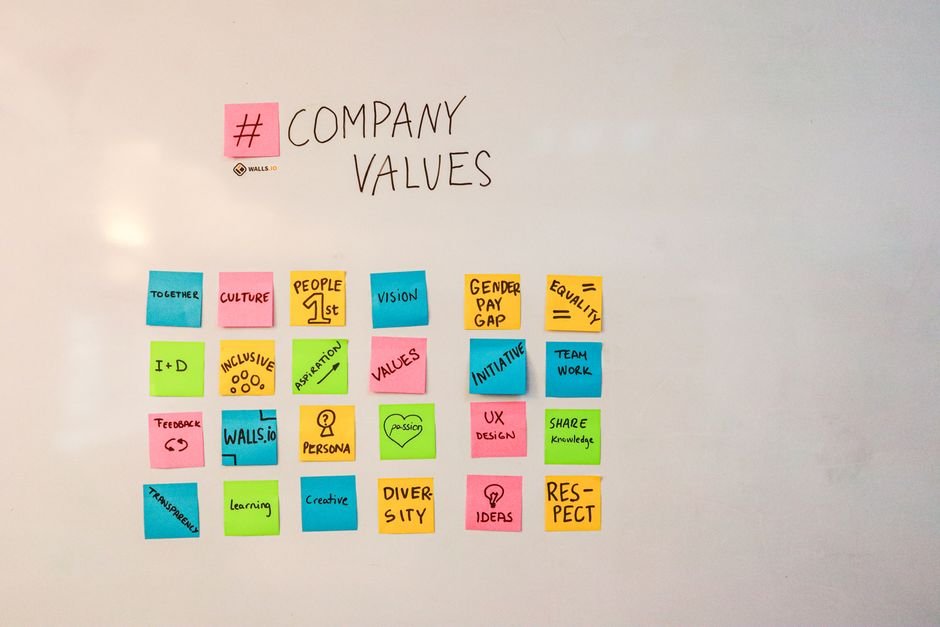
Values are not a wall poster. They are the filters through which you make decisions. Before you bring on your first employee, you need a short, honest list of what actually matters to your business and why.
Keep it real. Avoid generic words like “integrity” or “innovation” unless you can describe exactly what they look like in practice. Instead, write a one-sentence description for each value that explains the behavior behind it.
- Ownership: We do not wait to be told. If you see a problem, you own fixing it.
- Direct communication: We say what we mean in the room, not after the meeting.
- Learning over ego: We would rather be corrected and improve than be right and stagnate.
Three to five values is enough. More than that and none of them stick. Write them down, share them with anyone you work with, and return to them constantly when making decisions about people, process, and priorities.
Lead by Example: How Founder Behavior Sets the Tone
No one remembers what you said at the all-hands meeting. They remember what you did when a deadline slipped, when a client was difficult, or when a co-founder disagreed with you in front of the team. That is where culture lives.
To develop the leadership skills needed to model your culture, you have to close the gap between your stated values and your daily actions. That means being deliberate about small moments, not just the big ones.
A few practical habits that signal the culture you want to build:
- Start meetings on time. Every time.
- Acknowledge when you were wrong, publicly.
- Give credit specifically and often.
- Put the phone away when someone is talking to you.
These are not soft skills. They are cultural signals that compound over months and years into something powerful and self-reinforcing.
Hire for Culture Fit Without Sacrificing Diversity
Hiring for “culture fit” has a bad reputation, and for good reason. When founders use it as an excuse to hire people who look, think, and act like them, it kills both diversity and long-term performance. But that is not what real culture-fit hiring looks like.
Genuine culture-fit hiring means finding people who share your core values, not your background or personality. Someone who has never worked in a startup before but is deeply curious and takes initiative is a better fit than someone with the right resume who blames others when things go wrong.
In practice, this means writing interview questions that surface behaviors, not opinions. Instead of asking “Are you a team player?”, ask “Tell me about a time a project went wrong. What did you do?” The answer tells you far more about character and values alignment.
Diversity of experience, background, and perspective makes your culture stronger, more resilient, and more creative. You want shared values with varied viewpoints, not uniformity.
Build Rituals and Routines That Reinforce Your Values
Culture needs repetition to take hold. Rituals are how you embed values into the rhythm of daily work, turning abstract principles into concrete, repeated behaviors that the whole team shares.
A ritual does not have to be elaborate. It just has to be consistent. Some examples from early-stage teams that work well:
- A weekly five-minute “wins and lessons” share at the end of a team meeting
- A standing rule that every project post-mortem includes what went well alongside what failed
- Monthly one-on-ones where you specifically ask each person what is making their job harder
- A public Slack channel where anyone can share a mistake and what they learned from it
The ritual itself matters less than the consistency. Skipping it when things get busy sends a louder message than the ritual itself ever could. For more on building daily routines that reinforce your values consistently, the same principles that apply to personal habits apply to organizational ones.
Communicate Culture Explicitly and Repeatedly
Strong culture does not happen by osmosis. You have to name it, talk about it, and repeat it far more than feels natural. Most founders underestimate this.
When you make a decision that reflects your values, say so out loud. “I chose to be transparent with the team about our runway situation because honesty is a value we hold here, even when the news is hard.” That kind of explicit narration helps new people understand not just what you decided, but why, and what it means for how they should behave.
Onboarding is the highest-leverage culture moment you have with any new hire. Use it deliberately. Share your values, share real examples of what they look like in practice, and be honest about where you are still figuring things out. New employees arrive with their antennas up. What they learn in the first two weeks shapes how they interpret everything after.
Handle Early Conflicts and Missteps as Culture Moments
How you handle the first conflict, the first missed deadline, or the first time a team member behaves badly defines your culture more than any document you write. Founders who avoid these moments out of discomfort accidentally teach their teams that problems get ignored.
Address issues directly and promptly. This does not mean being harsh. It means being honest and clear. “That comment in the meeting was not aligned with how we treat each other here, and I want to talk about it” is a culture-defining statement. So is staying silent.
Understanding common reasons businesses fail, including weak internal culture, makes it clear that small tensions left unaddressed compound fast. A co-founder who cuts corners on quality, a first hire who is dismissive of feedback, a team that starts blaming rather than solving. These patterns start small and harden quickly if you do not intervene.
How to Measure and Evolve Your Culture Over Time
You cannot manage what you do not measure, and culture is no exception. The good news is that you do not need an expensive survey tool when your team is small. You need honest, regular conversation.
Start with a simple monthly question in your one-on-ones: “Is there anything about how we work together that feels off to you right now?” Then actually listen. Track themes. If three people mention that decisions feel unclear or that credit is not being shared fairly, that is data.
As you grow past ten or fifteen people, informal observation becomes harder. That is when lightweight pulse surveys (tools like Lattice or even a simple Google Form) become useful. Ask specific, behavioral questions, not vague satisfaction ratings.
Culture should also evolve intentionally as your business grows. The scrappy hustle that works at five people can become a liability at twenty-five. Revisit your values annually. Ask yourself whether they still describe how the best people in your company actually behave, and adjust if they do not. Learning how to build a strong company culture from the start does not mean locking in one version forever. It means staying honest and deliberate as you scale.
FAQ
Can you build a strong culture with a remote or distributed team?
Yes, but it requires more deliberate effort. Remote culture does not happen casually the way office culture can. You need to over-communicate your values, create explicit rituals that function asynchronously or via video, and make recognition and feedback visible rather than ambient. The principles are the same; the formats just need to adapt.
What is the difference between company culture and company values?
Values are the beliefs you say you hold. Culture is what actually happens when no one is looking. Ideally, they match. In practice, the gap between stated values and lived culture is where most organizations get into trouble. Your values are an aspiration; your culture is the daily reality. The goal is to close the distance between the two through consistent behavior and honest accountability.
How do you fix a toxic culture that formed unintentionally in the early stages?
Start by naming it honestly, with yourself and then with your team. Most toxic patterns in early-stage companies trace back to founder behavior, so that is where the reset has to begin. Acknowledge what went wrong without excessive self-flagellation, articulate clearly what you want instead, and then demonstrate the new standard through your own actions every day. Trust takes time to rebuild. Consistency over weeks and months is the only thing that works. If the toxicity has been reinforced by specific people who will not change, you may have to make hard personnel decisions as part of the reset.